

Verb vs Adverb: Learn the Difference Clearly!
Build strong sentences by understanding action and description
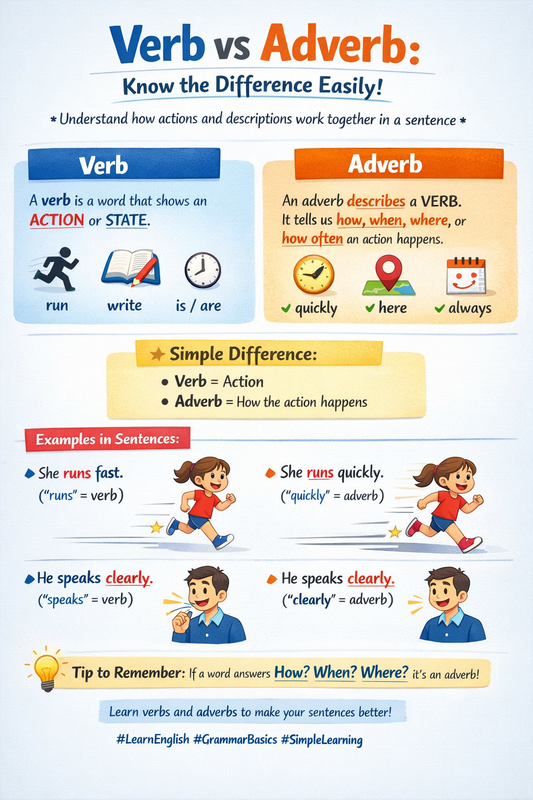

In English grammar, verbs and adverbs work together to make sentences meaningful and interesting. Let’s understand them in a simple way.
🔹 What is a Verb?
A verb is a word that shows an action, happening, or state of being.
It tells us what the subject is doing or what condition it is in.
👉 Examples: run, eat, write, play, is, are, was
📌 Example sentences:
She writes a letter.
They are happy.
He plays football.
🔹 What is an Adverb?
An adverb is a word that adds more information about a verb.
It tells us how, when, where, or how often something happens.
👉 Examples: quickly, slowly, yesterday, here, always, often
📌 Example sentences:
She writes neatly. (How?)
He arrived late. (When?)
They looked everywhere. (Where?)
She always studies. (How often?)
✨ Key Difference:
A verb shows the action.
An adverb describes the action.
🔸 See Them Together:
She runs quickly.
→ “runs” = verb (action)
→ “quickly” = adverb (how she runs)
He speaks softly.
→ “speaks” = verb
→ “softly” = adverb
💡 Easy Tip to Remember:
If a word answers questions like How? When? Where? How often?, it is most likely an adverb.
📚 Using verbs and adverbs properly helps you express your ideas clearly and makes your writing more powerful and interesting.
#LearnEnglish #GrammarTips #VerbVsAdverb #SimpleLearning

Comments
No comments yet. Be the first to comment!