

A teacher.public speaking expert and an English language coordinator in a school.love to read ,write and learn new things
Recent posts
-
50 Rules of Subject-Verb Agreement
Subject-Verb Agreement means that the verb must match the subject in number and person. A singular subject takes a singular verb, and a plural subject takes a plural verb. Basic Rules A singular subject takes a singular verb. She writes beautifully. A plural subject takes a plural verb. They write beautifully. Two singular subjects joined by "and" take a plural verb. Riya and Priya are frien…

-
50 Important Rules of Modals in English Grammar
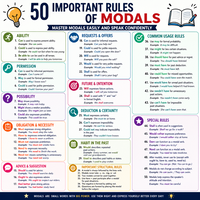
What Are Modals? Modals are helping verbs used to express ability, possibility, permission, obligation, advice, and more. They are always followed by the base form of the main verb. Ability Can is used to express present ability. Example: She can swim. Could is used to express past ability. Example: He could run fast when he was young. 3.Be able to can be used in all tenses. Example: I will…
-
50 Important Modal Rules in English Grammar
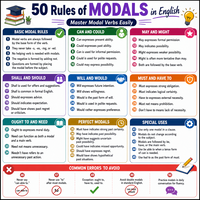
Modal verbs are helping verbs that express ability, possibility, permission, obligation, advice, and necessity. Here are 50 essential rules to help you understand and use them correctly. Basic Modal Rules Modal verbs are always followed by the base form of the verb. They never take -s, -es, -ing, or -ed. No helping verb is needed with modals. The negative is formed by adding not. Questions are…
-
100 Rules of Direct and Indirect Speech
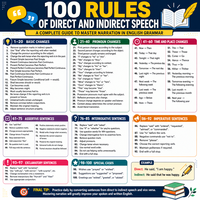
⎯ ❤️1Introduction Direct Speech repeats the exact words spoken by a person. Indirect Speech reports what someone said without quoting their exact words. Example: Direct: He said, "I am happy." Indirect: He said that he was happy. Rules 1–20: Basic Changes Remove quotation marks in indirect speech. Use "that" after the reporting verb when needed. Change the pronoun according to the subject. Change th…
-
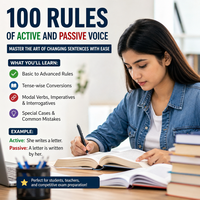
100 Essential Rules of Active and Passive Voice
Basic Rules In the active voice, the subject performs the action. In the passive voice, the subject receives the action. Only transitive verbs can be changed into passive voice. The object of the active sentence becomes the subject of the passive sentence. The subject of the active sentence becomes the object in the passive sentence. Use the appropriate form of the verb "to be" in passive con…
-
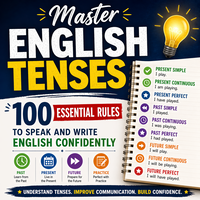
Master English Tenses
⎯ ❤️2100 Essential Rules of Tenses in English Grammar Mastering tenses is the key to speaking and writing English correctly. Here are 100 important tense rules explained in simple language. Present Tense Rules Use the simple present for daily routines. Add s/es with singular subjects. Plural subjects use the base verb. Use do/does for questions. Use do/does not for negatives. Use present continuo…
-
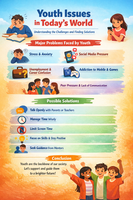
Youth Issues in Today’s World
⎯ ❤️1Today’s youth are talented, creative, and full of dreams. They want to achieve success and make their families proud. But at the same time, they are facing many problems that affect their mental, emotional, and physical well-being. ⚡ Major Problems Faced by Youth 🔹 Stress and Anxiety Students often feel pressure from studies, exams, and expectations. Fear of failure and competition can make them …
-
Traditional Learning vs Online Learning
⎯ ❤️2🏫 Traditional Learning Traditional learning happens in a classroom with teachers and students present together. Key Features: Face-to-face interaction with teachers 👩🏫 Fixed schedule and classroom environment ⏰ Better discipline and routine 📘 Immediate doubt solving Advantages: Strong personal connection with teachers and friends Helps in building social skills Less distraction compared to on…

-
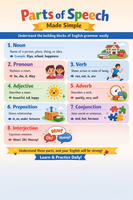
Parts of Speech Made Simple
English grammar may look difficult, but it becomes simple when you understand Parts of Speech. These are the basic categories of words that help us form meaningful sentences. Let’s learn them in an easy way 👇 🔹 1. Noun A noun is the name of a person, place, thing, or idea. 👉 Example: Riya, school, book, happiness 🔹 2. Pronoun A pronoun is used instead of a noun to avoid repetition. 👉 Example:…
-
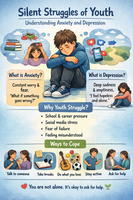
Silent Struggles of Youth
⎯ 🔥1Today, many young people are facing anxiety and depression, even if they don’t always show it. From school pressure to social media, from family expectations to future worries—life can feel overwhelming. What is Anxiety? Anxiety is when you feel constant worry, fear, or nervousness. It can make your heart race, disturb your sleep, and affect your focus. It’s like your mind is always thinking about…
-
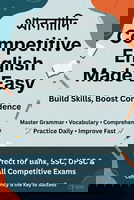
Competitive English Made Easy
⎯ ❤️1Competitive English is an important part of many exams. It helps you improve your reading, writing, and understanding skills. With regular practice, anyone can become good at it. Competitive English usually includes topics like grammar, vocabulary, comprehension, and sentence formation. You may see questions on synonyms, antonyms, error correction, fill in the blanks, and reading passages. To impr…
-
Sikh New Year & Baisakhi – A Festival of Faith and Courage
⎯ ❤️1🌼 Baisakhi is a very special day for Sikhs. It is celebrated as the Sikh New Year and also marks the foundation of the Khalsa Panth. This important day reminds us of courage, unity, and faith. 🪴On this day in 1699, Guru Gobind Singh Ji created the Khalsa Panth. He gave Sikhs a new identity and taught them to stand for truth, equality, and justice. The Khalsa became a symbol of bravery and dedica…

-
🌍 Care for Our Earth
⎯ ❤️1Environmental responsibility means taking care of our planet in our daily life. On Earth Day, we are reminded that the Earth is our only home, and it is our duty to protect it. Simple habits can make a big difference. We can save water by turning off taps when not in use. We can reduce pollution by using public transport, walking, or cycling. Planting trees helps clean the air and gives us oxygen.…

-
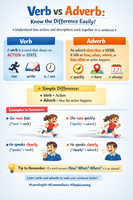
Verb vs Adverb: Learn the Difference Clearly!
In English grammar, verbs and adverbs work together to make sentences meaningful and interesting. Let’s understand them in a simple way. 🔹 What is a Verb? A verb is a word that shows an action, happening, or state of being. It tells us what the subject is doing or what condition it is in. 👉 Examples: run, eat, write, play, is, are, was 📌 Example sentences: She writes a letter. They are happy. …
-
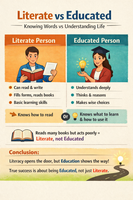
Literate vs Educated
⎯ 👏1Many people think that being literate and being educated are the same. But they are actually different. A literate person is someone who can read and write. They can understand words, fill forms, and read books or messages. Literacy is the basic step of learning. An educated person, on the other hand, goes beyond reading and writing. Education means understanding things deeply, thinking clearly, a…
-
Functional Grammar
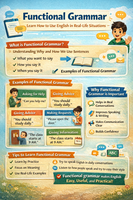
Functional grammar is a simple and practical way of learning English. It focuses on how we use language in daily life, not just on rules. 📌 What is Functional Grammar? Functional grammar means using English for a purpose. It helps you understand why and how we use sentences in real situations. 👉 It is not only about correct grammar, but also about: What you want to say How you say it When you sa…
-
Common Errors in English Writing
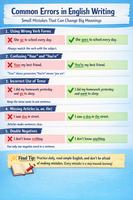
⎯ 👏1Many people make small mistakes while speaking or writing in English. These are called common errors. They are easy to fix if we understand them clearly. Let’s look at some common errors in simple language. 1. Using Wrong Verb Forms ❌ She go to school every day. ✅ She goes to school every day. 👉 Always match the verb with the subject. 2. Confusing “Your” and “You’re” ❌ Your my best friend. ✅ You’…
-
🤖 AI-Based English Learning
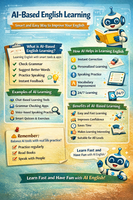
Today, technology is changing the way we learn English. One of the biggest changes is the use of Artificial Intelligence (AI). AI helps learners practice English in a smart, fast, and easy way. 📌 What is AI-Based English Learning? AI-based learning means using smart tools and apps that can teach, guide, and correct your English. 👉 These tools can: Check your grammar Suggest better words Help you…